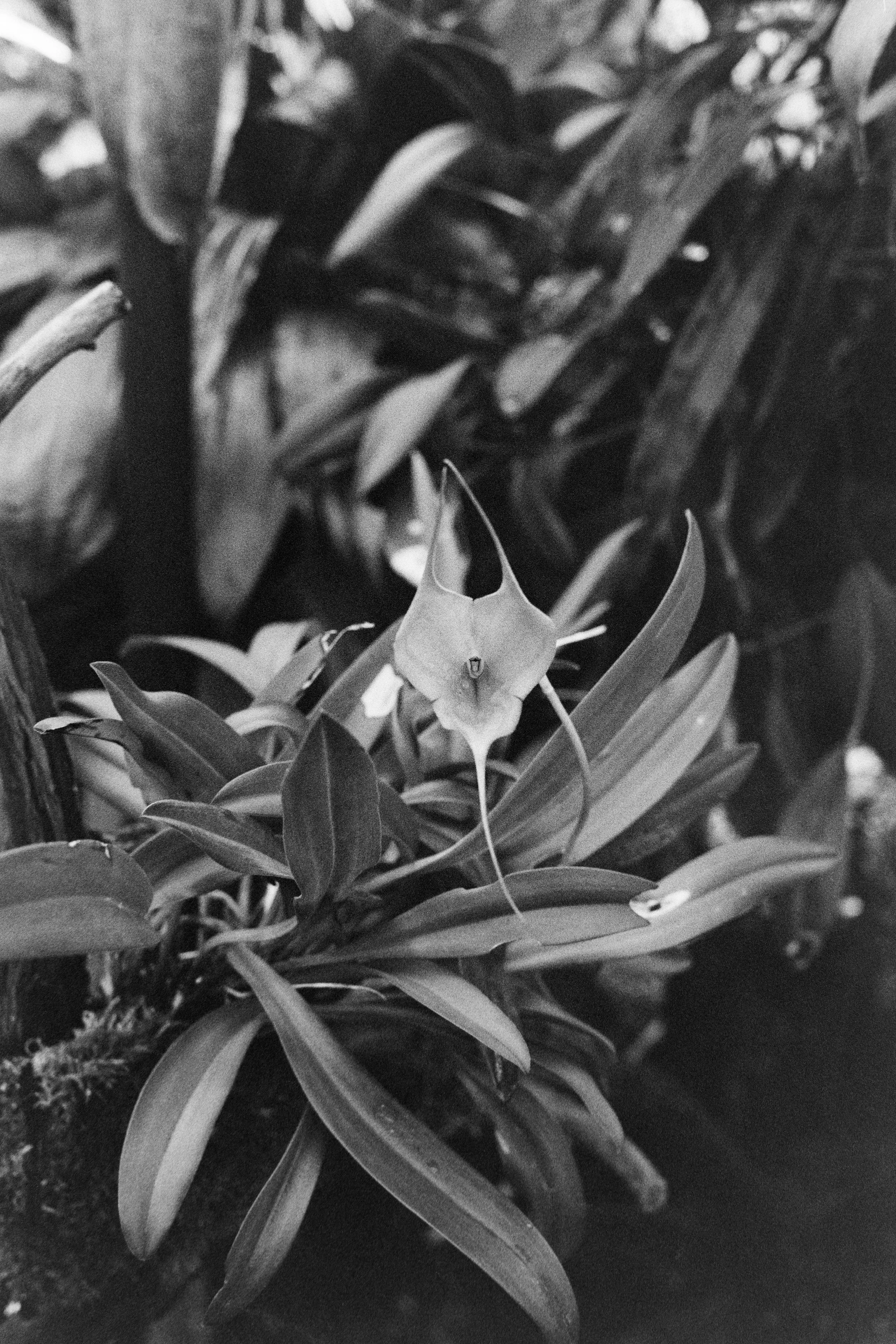
the glasshouse, 2024-2025

Glasshouses can be traced back to the Roman Empire. Emperor Tiberius used a specularium made of translucent mica to provide out-of-season heat and light to grow medicinal cucumbers.
In the Victorian era, new technology made giant glass buildings possible and public glasshouses boomed. The Victorians were obsessed with exotic plants brought back by explorers from around the globe and botany became a public spectacle. Glasshouses were places where ordinary people could see the natural world beyond Britain.
Today they have the dual purpose of public entertainment and serious scientific study. The buildings themselves are works of art. The plants inside transport visitors to: a rainforest, a jungle, a desert for the duration of their visits - perpetually tropical whatever the British weather outside.
As a documentary photographer, much of my work explores humankind’s relationship to the natural world. My interest in glasshouses is part of a wider fascination with curated realities that recreate the exotic in a local space. I am interested in their role as places to conserve rare and endangered plants that may be struggling to survive in native environments because of climate change and man-made threats to habitats.
Shot on 35mm black and white film and printed in the darkroom using environmentally-friendly practices and developer, my images were taken at RHS Garden Wisley, Royal Botanic Gardens Kew and Cambridge University Botanic Garden glasshouses.